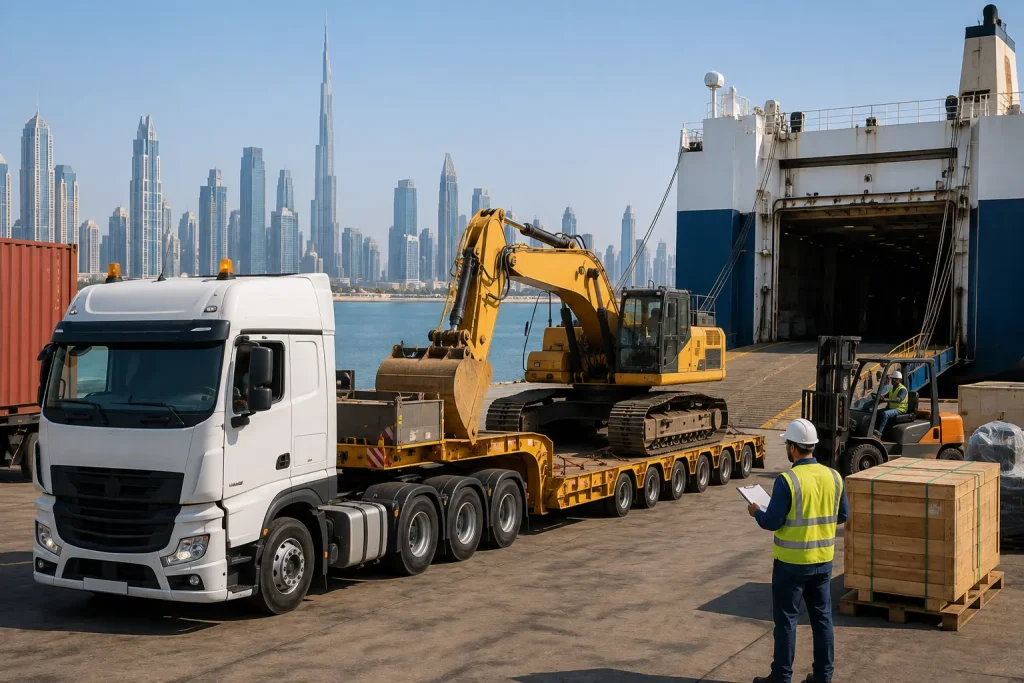
Shipping heavy and oversized goods from Dubai to Qatar requires more planning than sending standard cartons or household packages. Large machinery, industrial equipment, construction materials, vehicles, generators and other bulky items need careful handling from the moment they leave the warehouse until they reach their destination.
The good news is that with proper preparation, oversized cargo can be moved smoothly and safely. The key is to understand the shipment requirements early, select suitable transportation, prepare the right documentation and make sure the cargo is properly secured. A little planning before collection can prevent delays, unexpected costs and handling problems later.
Key Planning Steps for Shipping Heavy and Oversized Cargo
From accurate measurements and documentation to packaging, transportation and customs, several important factors need to be planned before the shipment begins.
- Start by Understanding the Cargo: Before arranging transportation, gather accurate information about the goods you want to ship. The carrier will usually need details such as the cargo’s dimensions, total weight, number of pieces and nature of the goods. For particularly large items, provide the length, width and height rather than relying on approximate measurements. Even a small difference can affect the type of vehicle required. It is also useful to determine whether the cargo is fragile, sensitive to weather, difficult to lift or requires special handling. This information allows the logistics provider to plan suitable equipment and loading arrangements.
- Measure Dimensions and Weight Accurately: Oversized cargo is generally assessed differently from regular shipments. Weight alone does not determine transportation requirements. The physical dimensions of the shipment can be equally important. Before booking transportation, measure:
- Overall length, width and height
- Gross weight of each item
- Total shipment weight
- Number of packages or individual units
- Centre of gravity, where relevant
- Loading and unloading requirements
Accurate measurements help the transport provider determine whether a standard trailer, low-bed trailer, flatbed or another specialized vehicle is appropriate.
- Check Road Transportation Requirements: For shipments moving by road, route planning is particularly important. A large vehicle carrying oversized cargo may not be able to follow exactly the same route as a normal delivery truck. The logistics provider may need to consider road width, bridge clearances, height restrictions, border procedures, traffic conditions and access to the final delivery location. This is especially important when the cargo is being delivered to an industrial facility, construction site or warehouse with restricted entry points. Checking the route in advance can prevent a situation where the vehicle reaches the destination but cannot safely access the premises.
- Prepare the Required Documentation: Documentation is one of the most important parts of an international cargo shipment. Missing or inconsistent information can create unnecessary delays at customs or border points. Depending on the shipment, documents may include commercial invoices, packing lists, customs declarations, certificates of origin and other supporting documents. The cargo description should be clear and accurate. Details such as quantity, value, weight and product description should match across relevant documents. If the shipment involves specialized machinery or commercial equipment, the consignee should also confirm whether any additional approvals or supporting paperwork are required before dispatch.
- Choose Suitable Packaging and Protection: Heavy goods need packaging that can withstand lifting, loading, road movement and unloading. Standard cardboard boxes may not be suitable for large or industrial items. Depending on the cargo, protection may include wooden crates, pallets, metal frames, protective covers, straps or other securing systems. Fragile components should have sufficient cushioning, while machinery may need protection against dust, moisture and surface damage. If the goods are exposed to outdoor conditions during transportation or loading, weather-resistant protection becomes even more important. The objective is not simply to cover the cargo. The packaging should keep the item stable and protected throughout the entire journey.
- Plan Loading and Unloading in Advance: A heavy shipment may require forklifts, cranes, loading ramps or other lifting equipment. These requirements should be confirmed before the vehicle arrives. For example, if a large machine weighs several tonnes and the destination does not have suitable unloading equipment, the delivery could be delayed even after the cargo has successfully crossed the border. Discuss loading and unloading arrangements with both the sender and receiver. Confirm who will provide the necessary lifting equipment and whether there is enough space for the vehicle to position itself safely.
- Consider Border and Customs Procedures: International road shipments need to pass through the relevant customs and border procedures. For Dubai-to-Qatar shipments, the exporter, importer and logistics provider should understand who is responsible for each stage. A professional logistics company can help coordinate documentation and customs-related processes, but the shipper should still provide accurate information and ensure that the consignee is prepared to receive the goods. It is also wise to avoid booking transportation at the last minute. Heavy and oversized shipments often require more coordination than regular cargo, so allowing sufficient preparation time can make the entire process easier.
- Select the Right Transport Provider: Not every cargo company is equipped to handle oversized shipments. When comparing providers, ask whether they have experience with heavy or abnormal-sized cargo and whether they can arrange suitable vehicles and handling equipment. A reliable provider should also be able to explain the expected process clearly, including collection, loading, border procedures, transportation and final delivery. When searching for a, look beyond the basic transportation price. Experience, communication, cargo handling capabilities and documentation support can be just as important as the quoted rate.
- Calculate the Complete Shipping Cost: The transportation charge is only one part of the overall cost. Heavy and oversized shipments may involve additional expenses depending on their dimensions, weight, handling requirements and destination. Potential costs can include:
- Specialized vehicle charges
- Loading and unloading equipment
- Packaging or crating
- Customs-related charges
- Insurance
- Storage or waiting charges
- Special handling
- Delivery to difficult-access locations
Ask for a detailed quotation so you understand what is included and what may be charged separately. This makes it easier to compare providers and avoid unexpected expenses.
- Keep the Receiver Informed: Communication between the sender, carrier and receiver can make a major difference. The receiving party should know when the cargo is expected and what equipment may be required for unloading. For construction sites and industrial facilities, delivery schedules may need to match working hours or site access arrangements. Providing advance notice allows the receiving team to prepare the necessary resources. If the shipment is being arranged through a cargo Dubai to Qatar provider, ask whether shipment updates or tracking information are available. Regular updates can make it easier to coordinate receiving staff and equipment.
Moving heavy and oversized goods from Dubai to Qatar is entirely manageable when the shipment is planned properly. Accurate measurements, suitable transportation, secure packaging, complete documentation and careful route planning can significantly reduce the risk of delays or damage.
Most importantly, start planning before the cargo is ready for collection. Giving the logistics provider complete information about the shipment allows them to recommend the right vehicle, handling method and delivery approach.
Whether you are transporting industrial machinery, construction equipment, vehicles or other oversized goods, treating logistics as an important part of the project – not an afterthought – can make the journey safer, smoother and more predictable.